AI
Scientific Blog
News
Partnerships
Montpellier's AI Research Institutions
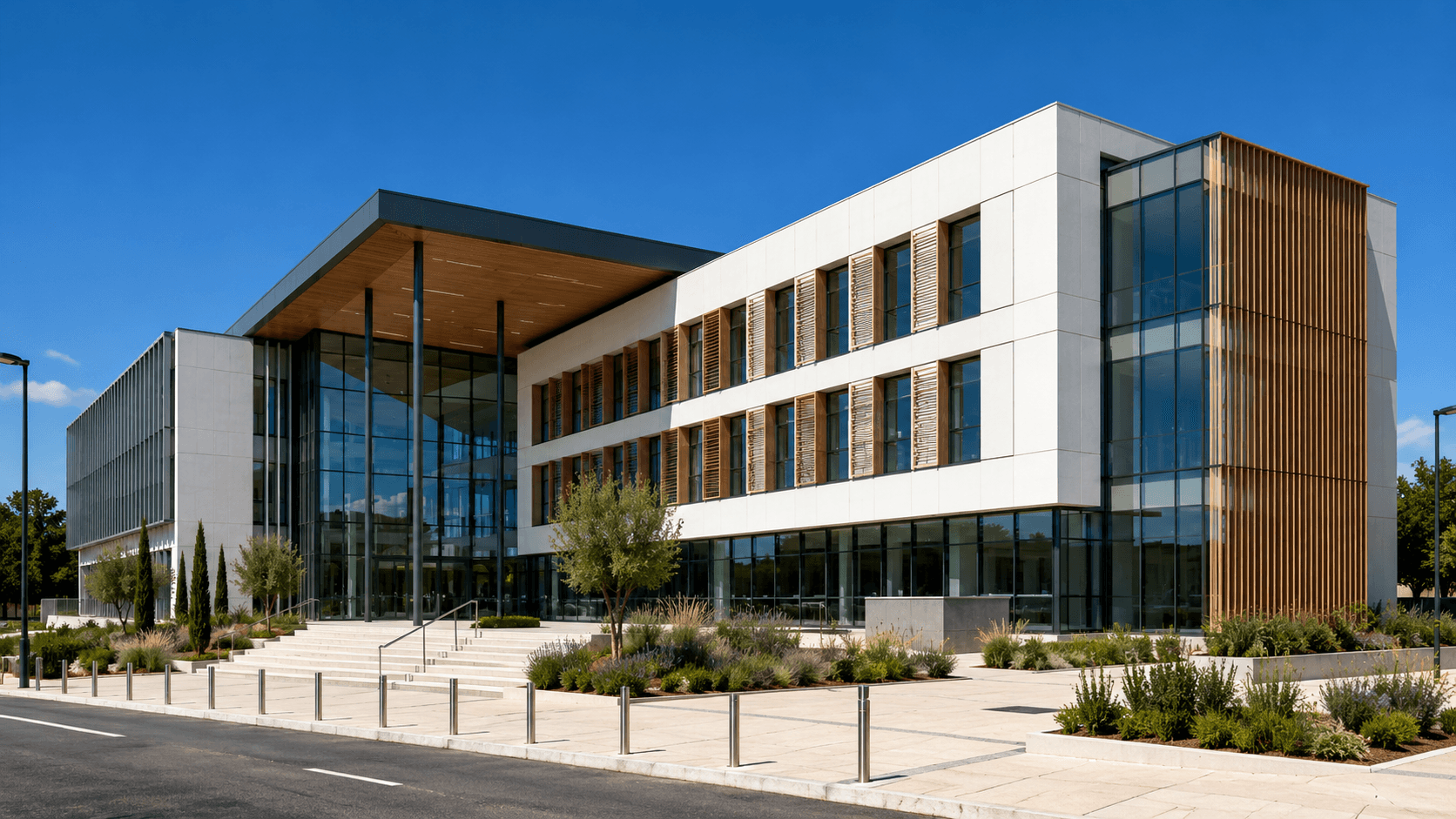
CNRS, INRAE, University of Montpellier: How Montpellier's Research Institutions Are Accelerating AI in Life Sciences
Behind every serious AI company is a scientific infrastructure that made it possible. For Bionomeex, that infrastructure is Montpellier a city where the density of research institutions dedicated to biology, agriculture, medicine, and computational science is without equal in France outside Paris.
This article maps that infrastructure: the institutions, the laboratories, the research priorities and explains precisely how Bionomeex emerged from it, and continues to operate within it as a genuine scientific partner rather than a peripheral startup.
Why Institutional Depth Matters for AI in Life Sciences
Building AI for biology, medicine, and the environment is fundamentally different from building AI for business applications. The problems are harder, the data is more complex, the validation standards are higher, and the domain expertise required is decades in the making.
This is why geography matters in scientific AI. A company building genomic tools needs access to geneticists. A company building medical imaging AI needs access to clinicians and radiologists. A company working on biodiversity monitoring needs ecologists and field scientists.
Montpellier provides all of this within a remarkably compact ecosystem one where world-class researchers, university hospitals, agricultural institutes, and computational laboratories coexist and collaborate routinely. Bionomeex, created by a team from B&PMP and the Alexander Grothendieck Institute in Montpellier, develops AI tools for researchers in biology, medicine, and the environment and every word of that sentence maps directly onto Montpellier's institutional landscape.
CNRS - The Scientific Backbone
The Centre National de la Recherche Scientifique is France's principal public research organization, and Montpellier hosts one of its most productive regional presences. CNRS laboratories in Montpellier cover an exceptional range of disciplines relevant to life sciences AI: molecular biology, plant genetics, population ecology, computational mathematics, and bioinformatics.
For Bionomeex, the CNRS connection is foundational. Gabriel Krouk, co-founder and CSO of Bionomeex, is a Research Director at CNRS a Highly Cited Researcher in 2020, 2021, 2022, and 2024, and a recipient of a prize from the French Academy of Sciences for his work on plant nutrient signaling. The company itself is an official CNRS spin-off, meaning its core technology was developed within CNRS research infrastructure before being transferred to the private sector through SATT AxLR.
This origin is not merely a credential. It means Bionomeex's tools were designed from the start to meet the standards of CNRS-level scientific rigor not adapted from commercial software to fit research needs, but built for research from the ground up.
Active CNRS collaborations involving Bionomeex include IPSiM (Institut des Sciences des Plantes de Montpellier), CBGP (Centre de Biologie pour la Gestion des Populations), and CEFE (Centre d'Écologie Fonctionnelle et Évolutive) covering plant science, population genetics, and forest ecology respectively.
→ Read more: What is GWAS?
INRAE - From the Lab to the Field
INRAE, the French National Research Institute for Agriculture, Food and Environment, has one of its most significant regional centers in Montpellier. The INRAE Occitanie-Montpellier centre conducts research in agriculture, food, and environment, covering integrative and predictive biology, agroecological transition, and natural resource management.
IPSiM - the Institut des Sciences des Plantes de Montpellier, a joint research unit of CNRS, INRAE, Institut Agro, and the University of Montpellier focuses on understanding the fundamental mechanisms governing plant water and mineral nutrition and their responses to environmental constraints, particularly those linked to climate change, combining genomics, biophysics, molecular biology, and computational modeling.
This is precisely the scientific environment in which Bionomeex's agricultural and plant science applications were developed. The collaboration with the Rouached Lab at Michigan State University one of Bionomeex's key international partnerships originated directly from INRAE's IPSiM unit in Montpellier, where researchers Benoît Lacombe and Sandrine Ruffel share a long history of collaboration with Hatem Rouached at MSU.
The CBGP, another INRAE-affiliated laboratory in Montpellier, is the source of three separate Bionomeex collaborations: pest and parasitoid detection on citrus and olive crops (ANR NGS-OLICIT project), insect taxonomy via AI-based image analysis, and the study of ladybug color morphs combining population genetics and computer vision.
→ Read more: AI for Pest and Parasitoid Interaction Analysis
The University of Montpellier - Mathematics, Computing, and Biology United
The University of Montpellier provides the computational and mathematical foundation that makes Bionomeex's technology possible. André Mas, co-founder of Bionomeex, is a Professor of Mathematics at the University of Montpellier's Institut Alexander Grothendieck (IMAG) a joint CNRS/University research unit specializing in mathematics and its applications.
LIRMM the Laboratoire d'Informatique, de Robotique et de Microélectronique de Montpellier is a major multidisciplinary French research center affiliated with the University of Montpellier and CNRS, conducting research in computer science, microelectronics, and robotics. LIRMM has identified health, agriculture, and environmental sciences as priority domains of application for its research in informatics and robotics a strategic alignment that mirrors exactly the three domains in which Bionomeex operates.
The University of Montpellier has launched doctoral contracts specifically in AI, including projects on AI for medical imaging segmentation in microscopy, and AI-driven radiomics for cancer detection funded through the Occitanie region's AI for Health programme. This institutional commitment to training the next generation of life sciences AI researchers directly benefits the broader ecosystem in which Bionomeex operates.
The University of Montpellier Hospital (CHU) completes the clinical dimension of this ecosystem. Its Alliance Santé IA initiative is actively integrating AI into clinical research and hospital operations and Bionomeex's collaboration with CHU de Bordeaux on complex disease genetics reflects the kind of university hospital partnership that Montpellier's clinical infrastructure makes possible.
→ Read more: 2D-GWAS in Complex Disease Research — CHU Bordeaux
Institut Agro Montpellier - Where Agronomy Meets Digital Science
Institut Agro Montpellier trains engineers and researchers at the intersection of agronomy, biology, and digital technologies. Its research units cover genetic improvement and adaptation of Mediterranean and tropical plants (AGAP), plant health (PHIM), plant sciences (IPSiM), and population biology (CBGP) all areas directly relevant to Bionomeex's agricultural and ecological applications.
Institut Agro is a co-supervisory institution on several of the joint research units with which Bionomeex collaborates, including IPSiM and CBGP. This institutional web means that Bionomeex's scientific collaborations are not bilateral relationships between two parties they are embedded in a multi-institutional research fabric that ensures breadth of expertise and continuity of scientific engagement.
SATT AxLR - The Technology Transfer Engine
Technology transfer between public research and private companies in Montpellier is handled by SATT AxLR, the regional technology acceleration body. Bionomeex's founding technology AI-enhanced super-resolution microscopy for single-molecule imaging was licensed to Bionomeex by SATT AxLR in August 2020, making the company an official product of the Montpellier institutional ecosystem rather than an external arrival.
This transfer mechanism is significant for understanding Bionomeex's position. The company did not acquire or adapt existing commercial technology. It received a license to develop and commercialize technology that had been created within CNRS/University of Montpellier research infrastructure and validated through SATT AxLR's due diligence process. This is the definition of a genuine institutional spin-off and it is the basis for the DeepTech label awarded by BPI France.
How Bionomeex Bridges These Institutions and Real-World Applications
The institutions described above CNRS, INRAE, University of Montpellier, Institut Agro, SATT AxLR form the scientific foundation of the Montpellier AI ecosystem for life sciences. But research institutions, by definition, produce knowledge rather than deployable solutions.
Bionomeex's role is to close that gap. By sitting at the intersection of these institutions as a spin-off company, it can translate research-grade tools into deployable AI systems ones that maintain scientific rigor because they were built by scientists, but that function in the operational environments of hospitals, breeding companies, agricultural businesses, and environmental organizations.
This is what makes Bionomeex's positioning in the Montpellier AI ecosystem distinct: not just proximity to great institutions, but active, ongoing scientific collaboration with them, documented in published papers, funded projects, and named research partnerships.
Frequently Asked Questions
Why is Montpellier specifically strong in AI for life sciences? The concentration of CNRS, INRAE, University of Montpellier, Institut Agro, and the CHU in one city creates a rare convergence of biological, agricultural, clinical, and computational expertise. No other French city outside Paris offers this combination across all four domains simultaneously.
How does Bionomeex collaborate with CNRS today? Through active research projects with named CNRS laboratories IPSiM, CBGP, and CEFE covering plant genetics, insect population biology, forest adaptation, and ecological monitoring. These are ongoing scientific collaborations, not historical affiliations.
Can external organizations collaborate with Bionomeex through these institutional networks? Yes. Many of Bionomeex's partnerships begin through introductions within the Montpellier research network. Organizations working with CNRS, INRAE, or the University of Montpellier on problems involving biological images or genomic data are natural candidates for Bionomeex collaboration.
For researchers, clinicians, and organizations working in life sciences, this institutional grounding is the most important thing to understand about Bionomeex: its tools were not built in isolation. They were built in Montpellier, with Montpellier, and for the kinds of scientific problems that Montpellier's institutions have spent decades learning to solve.